

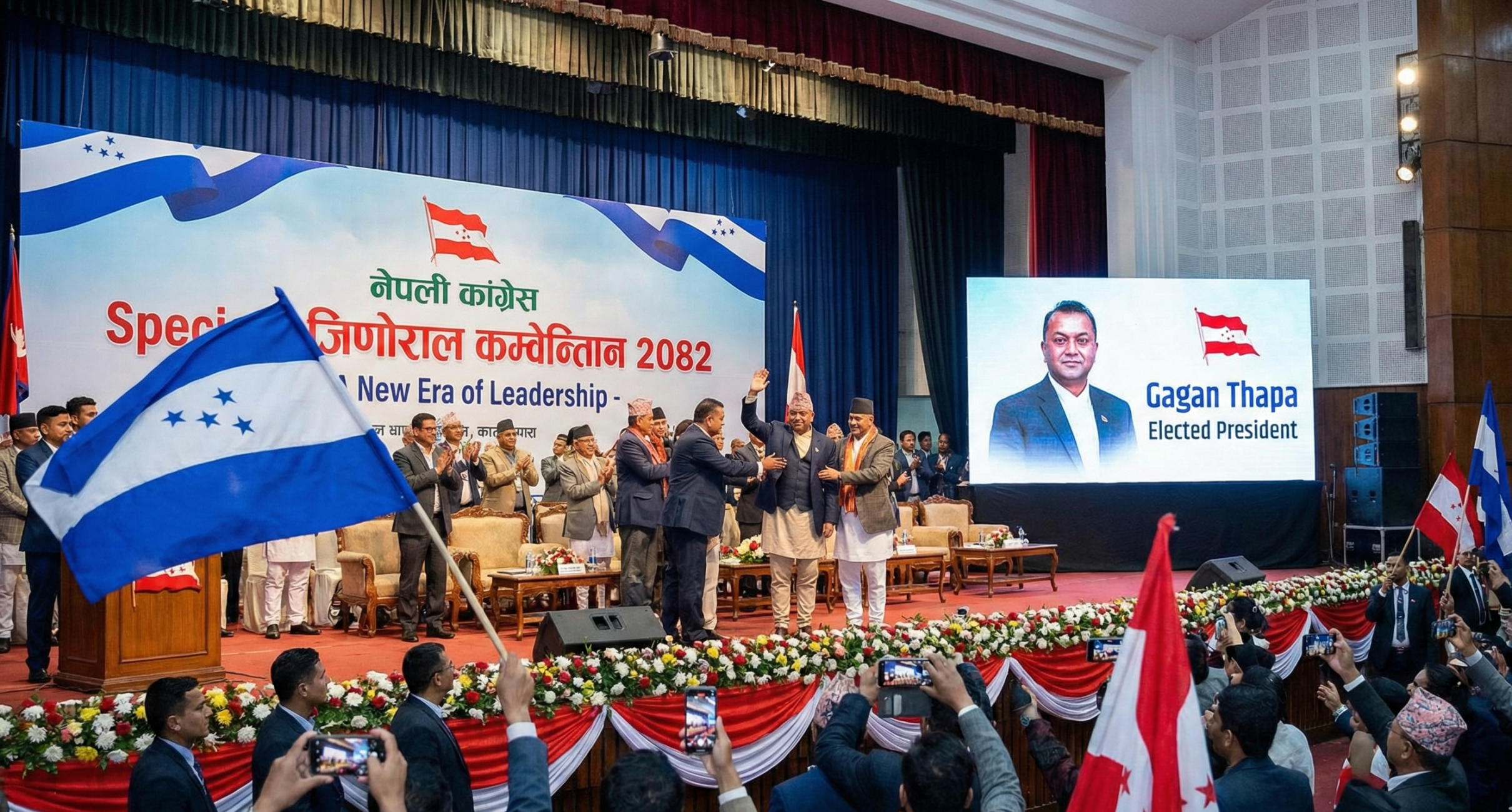
KATHMANDU, Jan 21, 2026 – In what is being described as the most significant political seismic shift in Nepal’s recent history, the Nepali Congress (NC)—the country’s oldest and largest democratic party—has formally split. The fracture marks the end of an era dominated by the “old guard” and signals the definitive arrival of a new generation of leadership. Following a contentious Special General Convention held earlier this month, Gagan Thapa has been officially recognized as the new President of the Nepali Congress, successfully wresting control from the establishment faction led by five-time Prime Minister Sher Bahadur Deuba.
The Tipping Point
The schism within the party had been widening since late 2025, fueled by the growing “Gen Z Uprising” that demanded accountability and retirement for aging political figures. The internal conflict reached a boiling point in the first week of January when the Deuba-led Central Working Committee attempted to suspend General Secretary Gagan Thapa and Bishwa Prakash Sharma for five years on charges of “violating party discipline.” The move, intended to consolidate Deuba’s grip on the party ahead of the upcoming general elections, backfired spectacularly. It galvanized the reformist faction, leading to an emergency gathering that declared the suspension null and void and called for a leadership overhaul.
The Rise of the Reformists
On January 14, 2026, the reformist faction held a “Special General Convention” at the Bhrikutimandap Exhibition Hall. Attended by a majority of the party’s convention representatives and district presidents, the convention unanimously elected the 49-year-old Thapa as the new Party President. In his acceptance speech, Thapa declared, “The Nepali Congress is not just a legacy of the past; it is the promise of the future. Today, we have reclaimed our party to restore its democratic soul.”
The convention also saw a significant reshuffling of key positions, with younger leaders and technocrats taking over the Central Working Committee, signaling a clear break from the traditional patronage politics that had plagued the party for decades.
Election Commission Verdict
The legitimacy of the split was sealed on January 16, when the Election Commission (EC) of Nepal delivered its verdict on the dispute. After reviewing the signatures and attendance records of the central committee members, the EC officially granted the Gagan Thapa-led faction the legal status of the “Nepali Congress,” along with the party’s iconic “Tree” election symbol. This decision left the Deuba faction legally isolated, forcing them to either register a new party or negotiate a graceful exit.
Deuba’s Strategic Retreat
In a surprising turn of events following the EC’s decision, Sher Bahadur Deuba, the 80-year-old veteran leader, announced that he would not contest the upcoming parliamentary elections scheduled for March 5. This marks the first time in over three decades that Deuba will sit out a national election. Political analysts view this as a “strategic retreat” acknowledging the shifting tides of public sentiment, which has turned heavily against octogenarian leadership.
The Road Ahead
With the legal battles settled, the revitalized Nepali Congress is now gearing up for the March 5 polls with renewed vigor. President Gagan Thapa has announced a bold decision to shift his constituency from Kathmandu-4 to Sarlahi-4, a move aimed at expanding the party’s base in the Madhesh province.
As the nation heads towards the election, the split of the Nepali Congress serves as a stark warning to other traditional parties: adapt to the aspirations of the new generation or face obsolescence. For now, the “Grand Old Party” has successfully reinvented itself, but the true test of this new leadership will be determined by the voters in March.